|
|
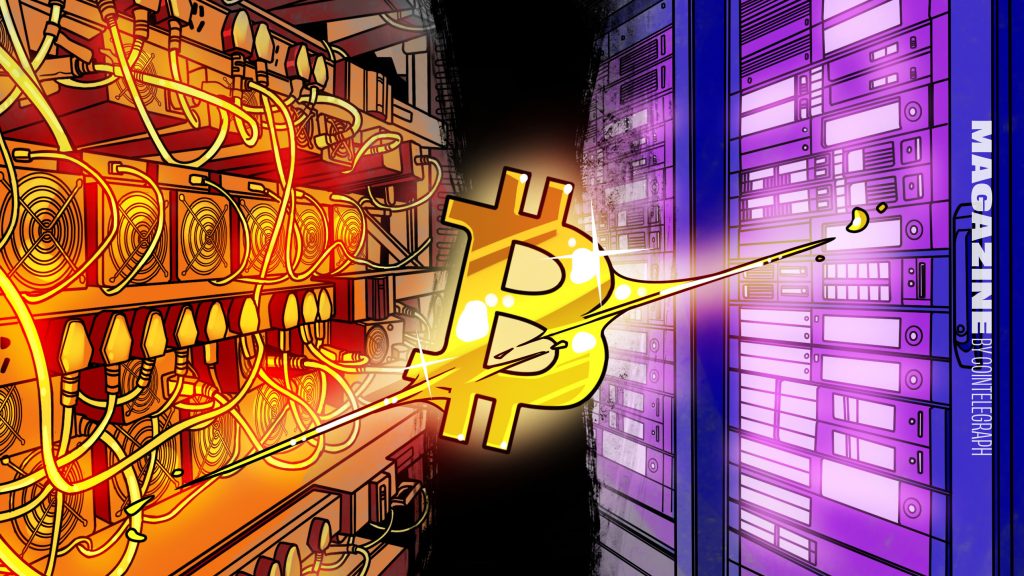
Bitcoin’s hashrate remains near all-time highs, even as some of the largest miners pivot to artificial intelligence.
Industry stakeholders say fears that a mass exodus of major miners to AI infrastructure will weaken the Bitcoin network are overblown, and the hashrate figures back them up.
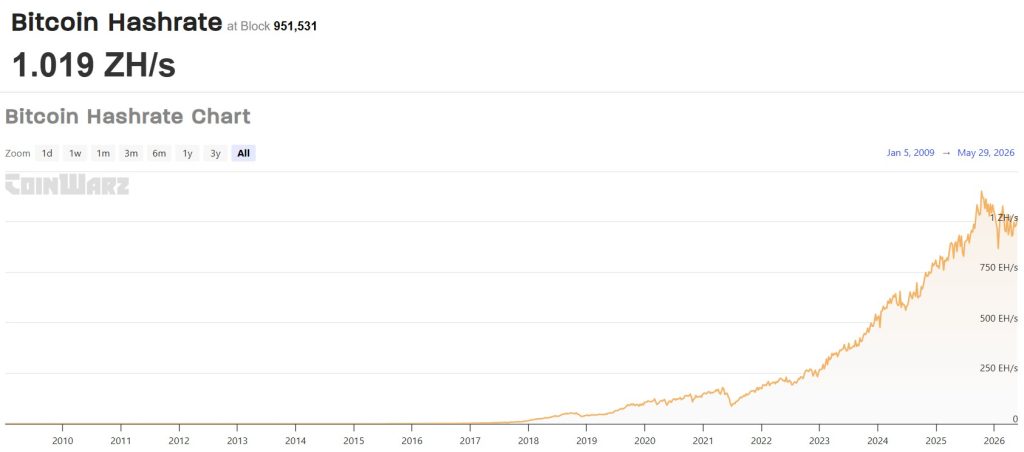
Bitcoin’s hashrate was at 1.019 zettahashes per second (ZH/s) on Friday, at block 951,531, according to CoinWarz. While it is down from the high of 1.285 ZH/s recorded last September, it remains well above the year’s low of 868.13 exahashes per second recorded in January.
“I think it’s great,” says Mark Zalan, CEO of GoMining, of the so-called miners’ AI exodus.
“The reason why Bitcoin mining and the Bitcoin infrastructure have worked so well is that it’s never been the case of somebody being a true believer in Bitcoin. It’s always been the case that they were economically incentivized to do it,” he tells Magazine.
AI gold rush for Bitcoin miners
But the artificial intelligence boom has even better economic incentives that attract many Bitcoin miners to switch over.
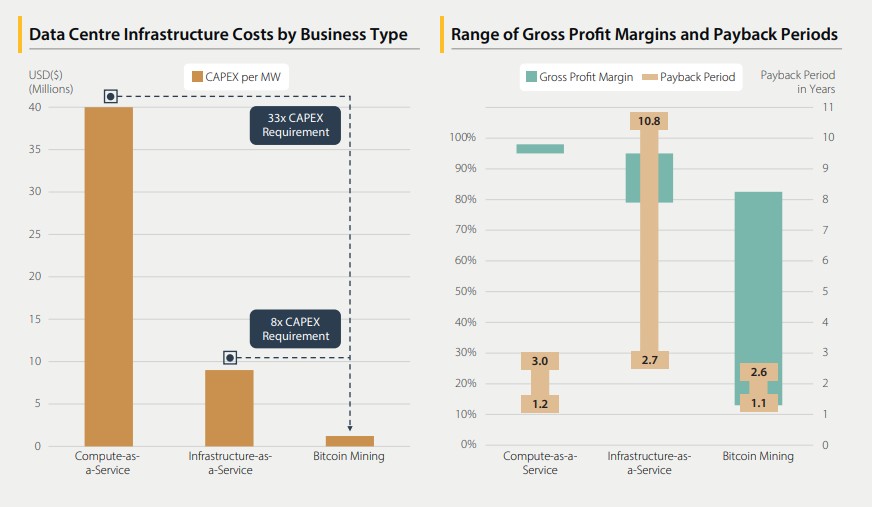
Compute-as-a-Service (CaaS), which is one of the AI/HPC strategies Bitcoin mining firms can more easily switch to, generates revenues of $1,600 to $4,000 per MWh, according to Cambridge Centre for Alternative Finance. That’s much higher than $80 to $151 MWh in Bitcoin mining.
Core Scientific, once one of North America’s largest Bitcoin miners, has reinvented itself as an AI data center operator. The company struck a 12-year agreement with AI hyperscaler CoreWeave, worth over $10 billion in contracted revenue.
IREN signed an agreement with Microsoft, with analysts at Bernstein estimating it could support roughly $3.7 billion in annualized revenue for its AI cloud infrastructure business.
TeraWulf and Hut 8 secured contracts valued at $6.7 billion and $7 billion respectively.
Across the sector, listed mining companies have cumulatively announced over $70 billion in AI and high-performance computing contracts, according to CoinShares’ Q1 mining report.
The pivot to AI by some of Bitcoin’s biggest names has spooked investors and observers, as on the surface it reads as a loss of confidence in the model.
The apparent contradiction between miners switching over to AI and the high hashrate continuing is because the hashrate and the hardware of the departing miners doesn’t dissipate into thin air. The machines get resold, redistributed and eventually switched back on, now aided by a new generation of hobby miners hitting the jackpot from their living rooms.
Solo mining’s viral moment
Solo miners have gained a lot of attention lately, as they contribute to the sense anyone can mine Bitcoin and get rich, and to Bitcoin’s community and DIY spirit
In early April, two solo miners won full Bitcoin block rewards within days of each other. On April 2 , a miner running roughly 230 terahashes per second (representing 0.00002% of the network’s total hashrate) validated block 943,411 and walked away with 3.139 BTC, worth around $210,000.
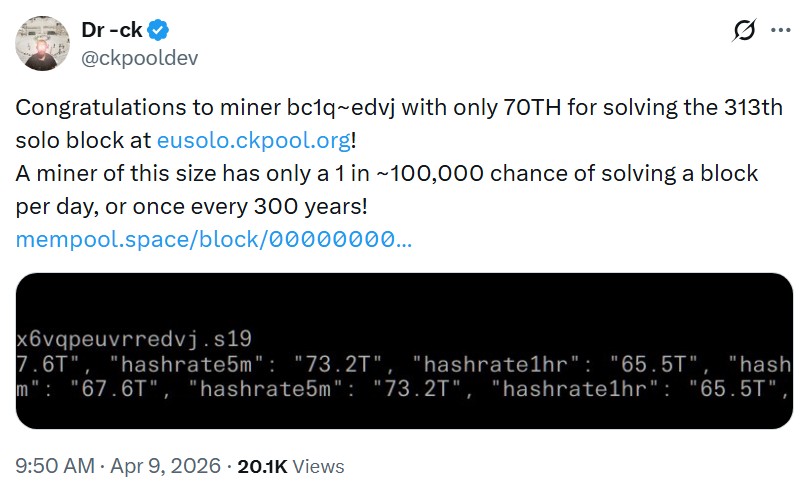
Days later, a second miner running just 70 terahashes per second solved block 944,306 through CKPool’s solo service, earning approximately $222,000.
While hobby mining is growing fast, General Kenobi, mining lead at Lunar Rails, tells Magazine they can’t make up the hashrate lost to industrial giants retreating from Bitcoin mining.
He argues that the high profile solo wins are the inevitable outcome of probability playing out over a large enough number of attempts, which is what Bitcoin mining has always been.
If enough people keep buying lottery tickets, eventually someone with a tiny machine is going to hit a block. It doesn’t mean industrial miners are disappearing or that home miners are suddenly taking over the network.
“The public pool (CKPool.dev) has been a solo mining pool for a long time,” Kenobi says, adding they are often very different to their public image. “The thing is, the people that usually point their hashrate there are called prosumers. They’re not just regular hobbyists.”
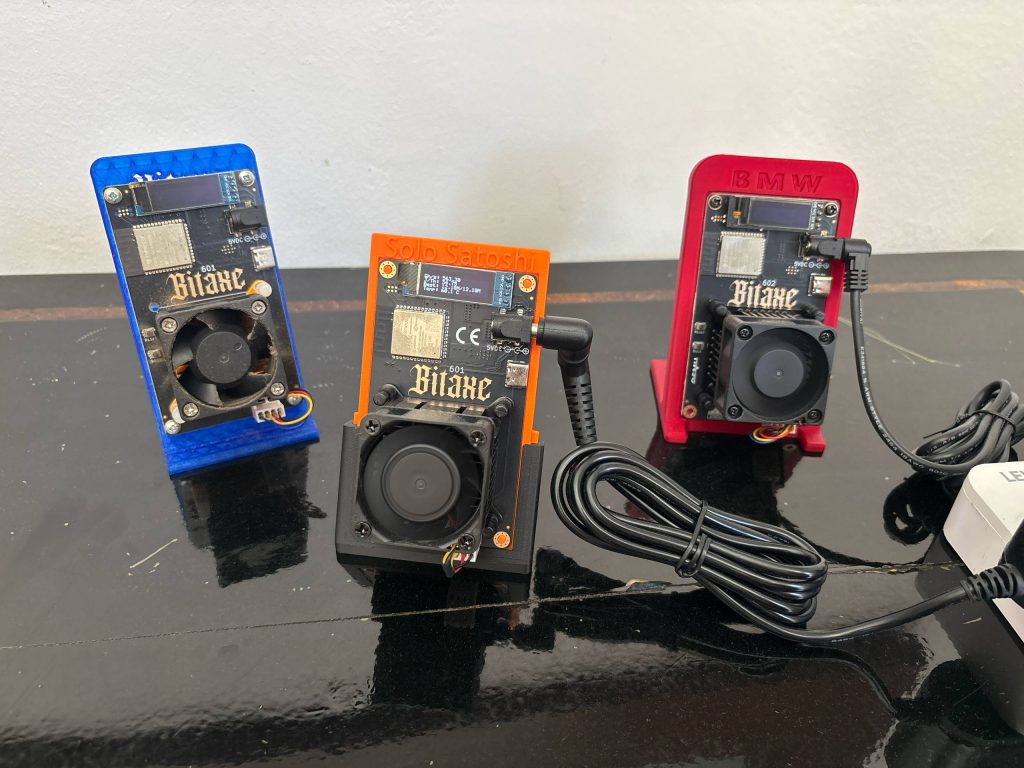
That said, the hobbyist mining movement is genuinely catching on, driven by the emergence of small, affordable devices like the Bitaxe that allow folks to mine Bitcoin from a desk or a shelf.
“People finding them in their homes, just having put $200 down for two Bitaxes, having them as little toys — that’s very, very recent.”
A million home miners each running a single terahash still only adds up to one petahash, which is just a fraction of the roughly one zettahash that currently secures the network.
Can fees replace the block reward?
The long-term picture for miners is more complicated than the current hashrate suggests.
Every four years, Bitcoin’s block reward is cut in half. It happened most recently in April 2024, dropping the subsidy from 6.25 BTC to 3.125 BTC per block.
The next halving, expected in 2028, will reduce it further to 1.5625 BTC.
Satoshi Nakamoto’s original design assumed that as block subsidies shrank over time, transaction fees would grow to fill the gap, keeping miners economically incentivised to secure the network. That’s not happening.
According to CoinShares, transaction fees averaged just 0.018 BTC per block in late 2025, consistently below 1% of total block rewards.
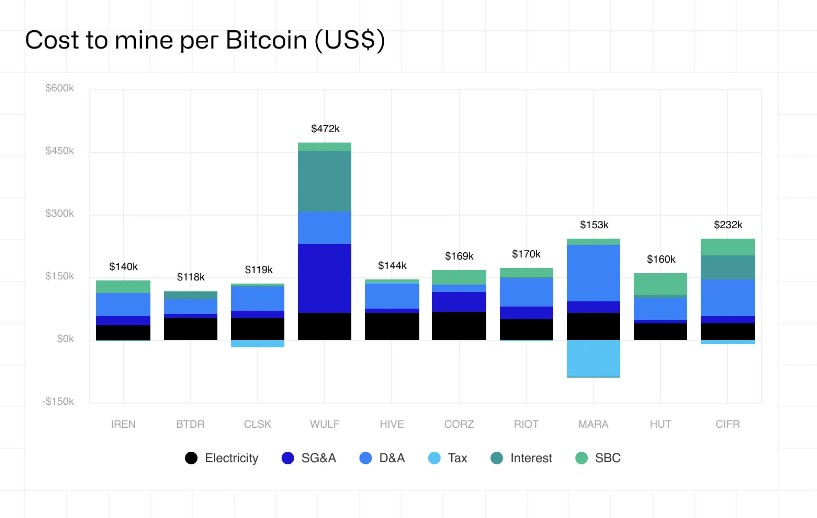
Zalan says that is the deeper threat to the network than industrial miners taking their infrastructure to AI.
His argument is that Bitcoin’s fee market will never grow without Bitcoin functioning as an actual currency. Without transaction volume, miners face a revenue cliff with every halving.
The solution, in his view, is not more efficient hardware or cheaper energy, it is making Bitcoin spendable.
“The velocity of money is an important factor to the overall health of the ecosystem,” he says. “Right now, with Bitcoin sitting there on balance sheets and everybody’s hodling it, it’s pretty much dead weight.”
The industry has been trying to solve this for years. The Lightning Network is one of the oldest examples (though it does little to generate Bitcoin fees), and BTCPay Server has become a default infrastructure layer for merchants accepting Bitcoin. But transaction volume has not been sufficient to move the needle for miners.
GoMining unveiled its own attempt earlier this month, GoBTC Pay, an instant Bitcoin payment protocol at layer one It charges a 0.2% fee in Bitcoin to merchants, but is free for consumers. Half the fees generated go to the miners who confirm the transaction.
If such solutions are adopted very widely, they could help generate the kind of transaction fee revenue that miners have been waiting on since the network launched.
The AI pivot is not the end of Bitcoin mining
The Bitcoin network has survived the departure of miners before. It survived China’s ban in 2021, and the 2022 bear market that pushed public miners into bankruptcy.
The current AI pivot is a slower and more orderly shift than either of those.
Kenobi says that the industry’s self-correcting nature is precisely on brand.
“Every four years, everyone who’s sticking out too high, their heads get chopped off, so to speak. Whoever’s still around and has positioned themselves properly, they reap the benefits,” he says.
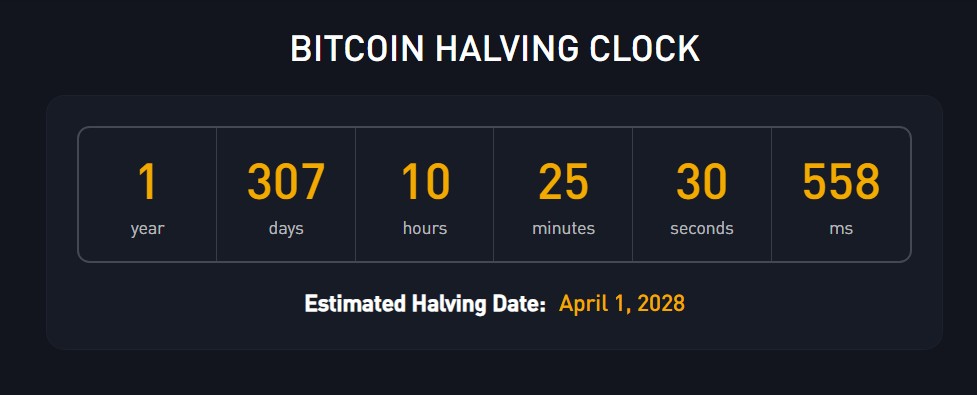
Zalan says that the real threat was never the AI pivot to begin with. The hashrate has held while hardware has found new hands, allowing the network to absorb the shift. But there will come a day when block subsidies alone are no longer enough for large-scale mining businesses.
“The transaction fees will become a supplemental factor to the mining rewards, and we haven’t seen that really to the extent that maybe Satoshi envisioned it,” he says.
But he isn’t pessimistic about the outcome.
“The built-in incentives have always adjusted and kept mining a well-incentivized activity. And we think it will continue to be that way going forward.”