
|
|
Japanese corporate pension fund plans 1% crypto allocation: Nikkei
A Japanese corporate pension fund serving about 1,200 small and medium-sized businesses plans to allocate roughly 1% of its assets to cryptocurrency during fiscal year 2026.
According to Nikkei, the Nationwide Business Corporate Pension Fund, based in Okayama, will invest in a passive fund managed by an unnamed “major“ hedge fund that holds multiple crypto assets. The pension fund reportedly manages about 21.3 billion yen in assets (about $130 million).
Japanese crypto news site CoinPost reported that the pension fund is adding crypto as part of an effort to diversify its exposure. It reportedly allocates 80% of its assets to yen, 15% to US dollars and 5% to other currencies.
The move suggests some of Japan’s institutional investors are becoming more willing to consider crypto as an alternative asset class as digital assets gain a larger foothold in the country’s financial system.
South Korea pushes Travel Rule expansion for smaller crypto transfers
South Korea alreadyappliesTravel Rule requirements to crypto transfers above 1 million won ($650), and the latest proposal from the Financial Intelligence Unit (FIU)calls for extending those obligations to smaller transactions.
The crypto Travel Rule is a global AML standard that requires crypto exchanges to share sender and recipient information for transfers above certain thresholds. It is designed to improve the traceability of funds moving between platforms.
The FIU said Travel Rule obligations should apply to both originating and receiving crypto asset service providers (CASPs) to close gaps in cross-border transfers.
The FIU also called for stronger action against offshore and unregistered crypto platforms, citing increased misuse in illicit finance cases and risks of regulatory arbitrage.
G7 calls for joint action on North Korean crypto theft, cybercrime
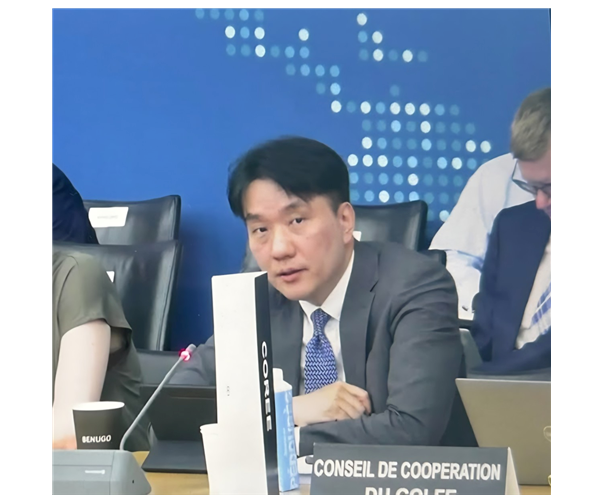
Group of Seven (G7) leaders have renewed their call for joint action against North Korean cryptocurrency thefts and cybercrime.
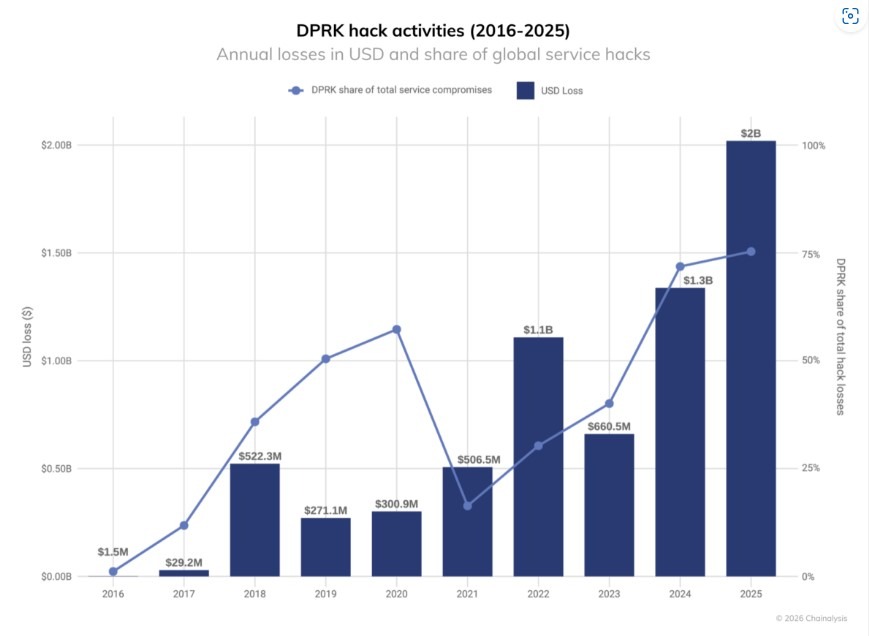
In a statement adopted at this week’s G7 summit in Évian-les-Bains, France, the leaders expressed “deep concern” over North Korea’s nuclear and ballistic missile programs. The United Nations and security researchers have linked North Korea’s crypto thefts to funding for the country’s weapons programs.
The G7 leaders did not specify what joint actions should be taken though, making no mention of measures such as exchange screening, sanctions or actions against mixing services.
During the G7’s June 2025 summit in Canada, the group’s chair alsocalledfor members to jointly address “DPRK cryptocurrency thefts fueling” the country’s nuclear and ballistic missile programs.
The renewed call comes amid a series of high-profile exploits with suspected links to North Korean actors, including the roughly $285 million Drift Protocol exploit in April and the $36 million Humanity Protocol breach in June.
Philippine SEC signals readiness for RWA tokenization
The Philippine Securities and Exchange Commission (SEC) has signaled that the country is ready to accommodate the tokenization of real-world assets (RWAs).
Speaking onstage at the Philippine Blockchain Week 2026, SEC Commissioner Rogelio Quevedo said the agency was “now fully convinced that we have the proper law [and] the proper regulatory mind and background” to accept asset tokenization. He said the technology could spur innovation in the capital markets and “revolutionize” stock exchanges.
Quevedo told Cointelegraph that tokenized investment products could provide overseas Filipino workers (OFWs) with more legitimate investment options.
“Our OFWs, they have the capital. They do not know where to place their money. They do not know how to make their money earn,” he said, pointing to investment scams that have targeted Filipinos seeking returns,” Quevedo said.
“We are also using artificial intelligence to go after these unscrupulous scams,” he added, stressing that the SEC was working with Google, TikTok and other online platforms to remove illegal investment offerings.
Dash eyes Philippines as market for crypto payments
Dash is exploring the Philippines as a potential market for crypto payments, citing demand for lower-cost transactions and the country’s openness to digital finance tools.
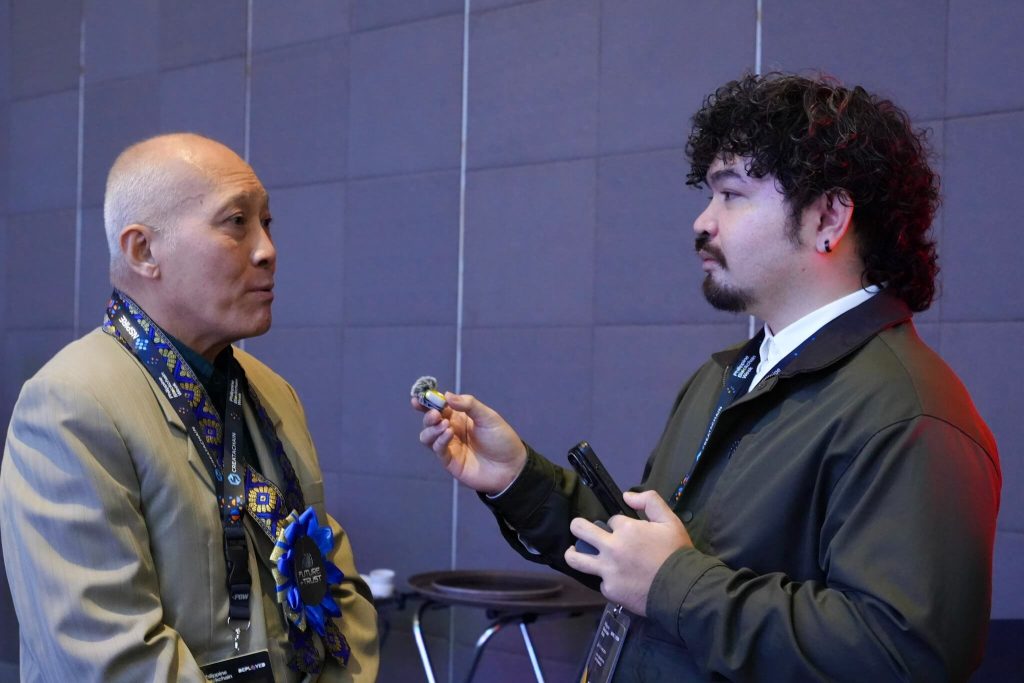
In an interview with Cointelegraph at the Philippine Blockchain Week 2026, Daria Chernozub, global adoption lead at Dash Blockchain, said the project focuses on emerging markets where users face high fees and need simpler payment options.
Also Read: Crypto in the Philippines — Necessity is the mother of adoption
“We believe that Dash brings the technology and the payment solutions for people who are suffering from high commissions [and] who need something easy to use,” Chernozub said, adding that the Philippines fits that profile because consumers are open to learning about new technologies.
She said Dash is still assessing the local market and prioritizing legal compliance before any launch. She said Dash had begun communicating with major market participants and had prepared a legal opinion letter for discussions with regulatory and financial industry bodies.
Bybit lands on Singapore MAS Investor Alert List
Crypto exchange Bybit has been added to the Monetary Authority of Singapore’s (MAS) Investor Alert List, a registry designed to warn consumers about entities that may be wrongly perceived as licensed or regulated by the financial watchdog.
Bybit Fintech Limited and Bybit appeared on the MAS alert list on Wednesday, although the regulator did not provide a specific reason for their inclusion.
Although Bybit was founded by Singaporean entrepreneur Ben Zhou, the exchange is not licensed to operate in the city-state. Singapore is listed among the company’s “Service Restricted Countries” on itswebsite, meaning users in the jurisdiction are geoblocked from accessing its services.
“Bybit has consistently engaged openly and constructively with MAS and has been maintaining measures designed to prevent access by Singapore users,” the exchange said in the post.
China pays closer attention to stablecoins as cross-border role expands
China’s central bank is paying closer attention to stablecoins as privately issued digital currencies take on a larger role in the international monetary system and cross-border payments.
Wang Xin, director general of the Research Bureau at the People’s Bank of China (PBOC), urged authorities to closely monitor the impact of stablecoins while improving international coordination and regulation, Chinese news outlet The Paper reported on Wednesday.
“We also need to pay attention to several new areas, such as whether stablecoins will play a more important role in cross-border payments, and how regulation, international coordination and cooperation should proceed,” Wang reportedly said, according to a machine translation.
He also warned that growing uncertainty and a potential weaponization of payments could disrupt normal cross-border transactions.While Wang advocated for stronger oversight and cautious exploration, he did not endorse stablecoins or announce policy changes.
Binance’s regulatory status in the Philippines clarified
Binance is allowed to provide crypto trading access to users in the Philippines through its arrangement with BlockShoals Technologies, but neither company is authorized to handle peso transfers or perform other activities regulated by the country’s central bank, according to legal adviser Marie Antonette Quiogue.
Quiogue, head of legal at BlockShoals, told Cointelegraph that Binance’s local operations fall under the Securities and Exchange Commission’s (SEC) crypto asset service provider (CASP) framework. She said BlockShoals serves as a crypto asset intermediary.
The arrangement forms part of Binance’s effort to reestablish a presence in the Philippines after regulators moved to restrict access to the exchange over licensing concerns in 2024. Under the structure presented by BlockShoals, the company participates in the SEC’s Strategic Sandbox, or StratBox.
The Bangko Sentral ng Pilipinas (BSP), the nation’s central bank, told Cointelegraph that neither Binance nor BlockShoals is authorized to operate as a virtual asset service provider (VASP) yet.
“Participation in the regulatory sandbox does not exempt an entity from complying with applicable laws, rules, and regulations, including any licensing requirements imposed by relevant regulators,” the BSP said, adding that it was coordinating with the SEC on the matter.